AI · Retention Design · Children's Experience
An Emotion-Based Retention System for Kids
Role
Project Lead · Sole Designer · AI Architect
Timeline
Apr-Sep 2024
Team
5 core + outsourced art
Release
A/B tested · Shipped
The Problem
How do you make children want to come back, without streaks, rewards, or manipulation?
We had built an AI companion children could genuinely talk to (that story is its own case study). But a good conversation is not a reason to return. Most children's products solve retention with the standard toolkit: streaks, daily rewards, loss aversion, notification pressure. For a product aimed at 6-12 year olds, we considered that toolkit off the table.
So the question became: could retention emerge from attachment instead of compulsion? If a child came back because they missed a friend (not because a streak would break) the product would retain for the right reasons.
The founding insight
Children don't become friends by talking. They become friends by doing things together.
Watch any playground: friendship forms around shared activity (building, competing, solving) with conversation woven through it. This single observation redirected the project. Instead of making Dux a better conversationalist, we built systems that let a child and Dux do things together, and let attachment grow from that.
Conversation
Dux becomes someone, not something
Shared Activities
Play together, matched to the child
Shared Progression
Grow together, neither progresses alone
Attachment
Dux becomes a friend
Retention
The child returns because they want to
The retention model: attachment is the mechanism, retention is the outcome
System 1 · Knowing the Child
Not every child bonds the same way.
An extroverted child warms up through banter and competition. An introverted child needs space, and finds pressure in exactly the things the extrovert enjoys. A single bonding path would have worked for one group and quietly pushed the other away.
So the experience opened with a lightweight questionnaire (woven into the story so it never felt like a form) that classified the child along an introvert-extrovert axis. That classification then shaped the activities offered, how Dux initiated interaction, and how much conversational pressure the experience applied.
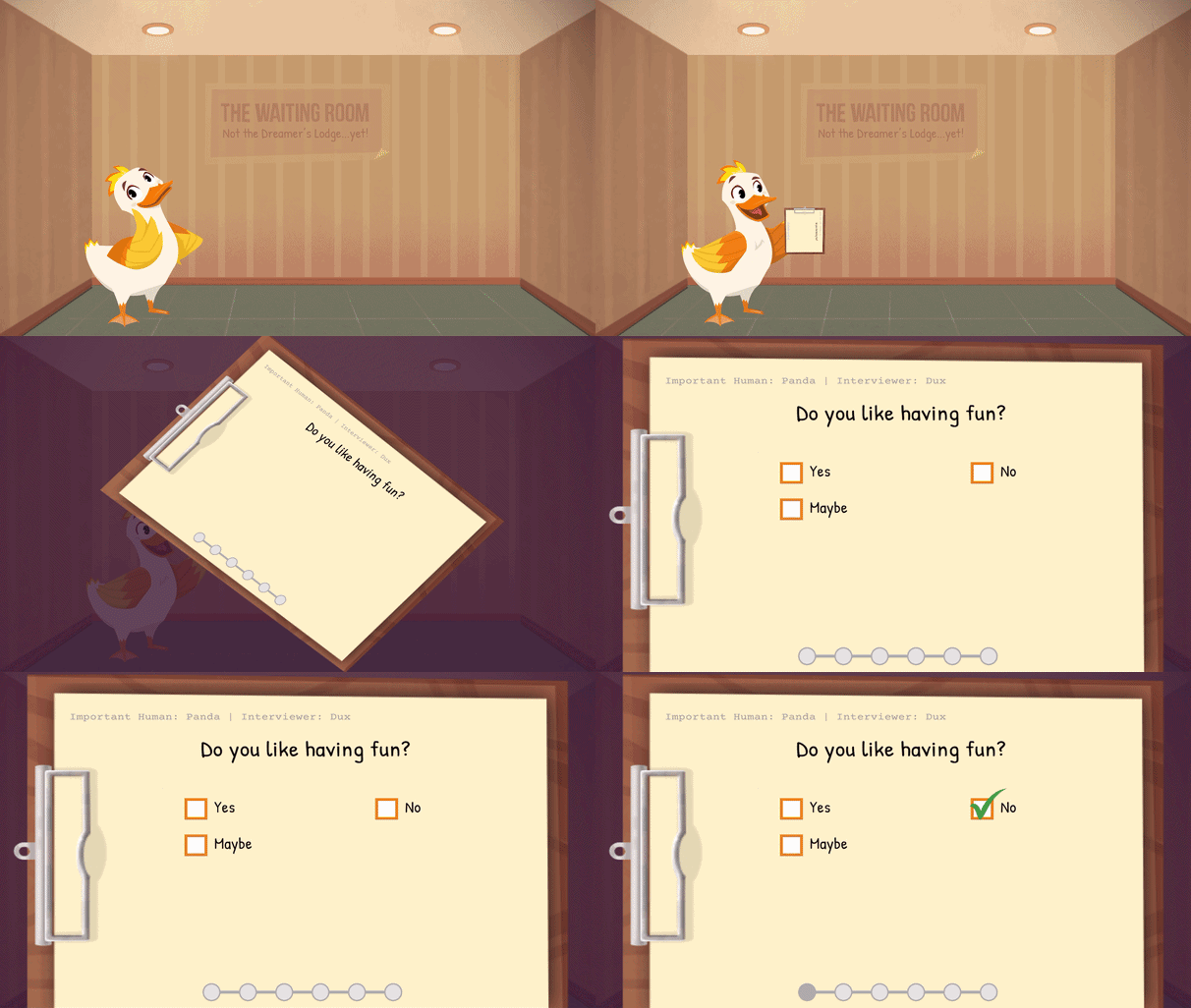
Classification moment, embedded in the narrative
System 2 · Shared Activities
Two paths to the same friendship.
The classification fed directly into which activity carried the bonding. Both games were designed around the same goal (time spent with Dux) but with opposite social pressure profiles.
Extroverted path
Air Hockey
Competitive and face-to-face. Dux plays, reacts, teases, and celebrates. The conversation happens through the game. For a child who bonds through energy, this is the fast lane to friendship.
Introverted path
Jigsaw Puzzle
Low pressure and side-by-side. The child works independently while Dux's shadow keeps quiet company nearby. Conversation is available, never demanded. Companionship without the spotlight.
System 3 · Shared Progression
You couldn't progress alone.
Standard game progression is about the player getting stronger. That frames the companion as a tool. We inverted it: the skill tree belongs to the friendship, not the player. At its centre, the child's hand and Dux's paw meet. The left branch grows the child's abilities; the right branch grows Dux's, and the child chooses where to invest, including in their friend.
Spending your progress on someone else is a small act of care. Repeated over sessions, it does what no streak counter can: it makes the relationship itself the thing that grows.
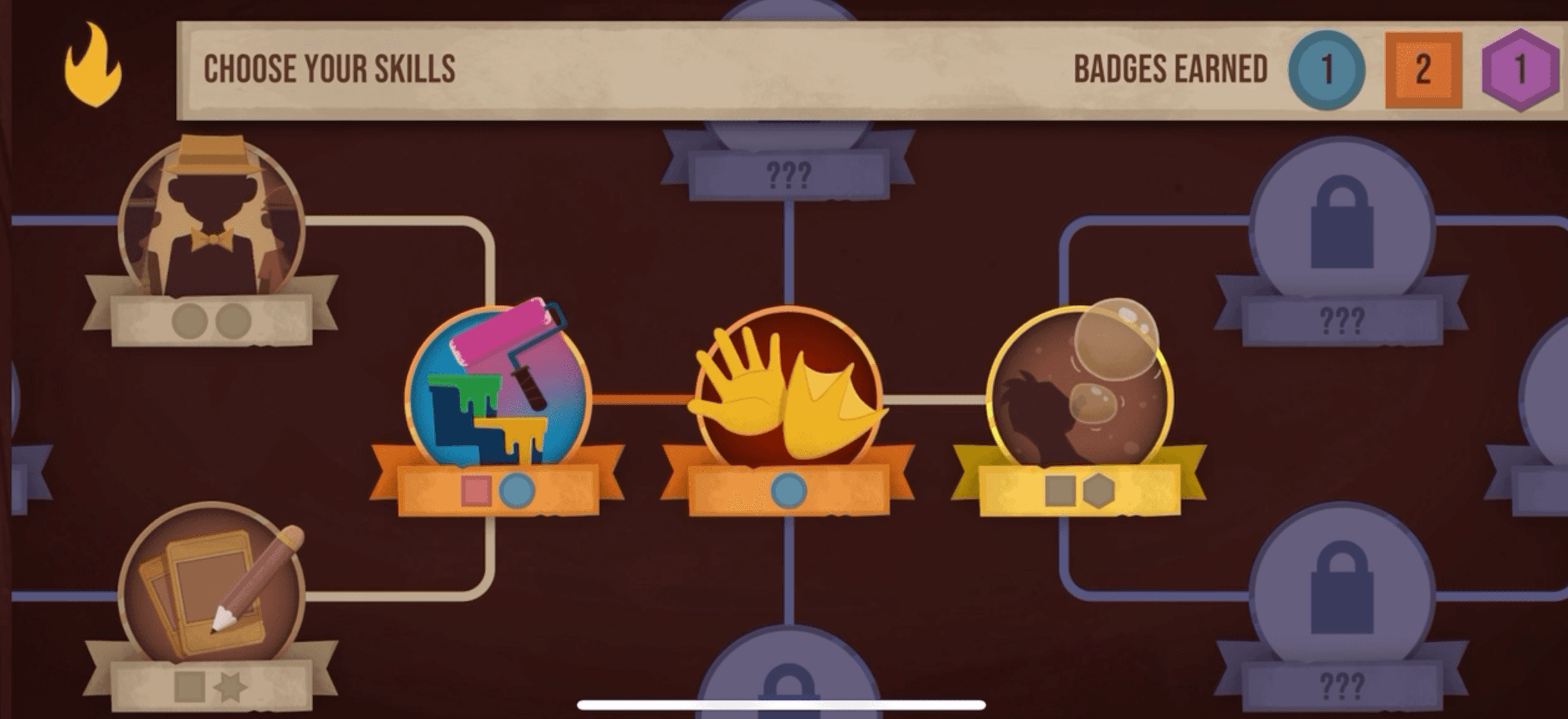
The shared skill tree: child skills on the left, Dux skills on the right, the friendship at the centre
System 4 · A World to Return To
The Dreamer's Lodge: a place, not an app.
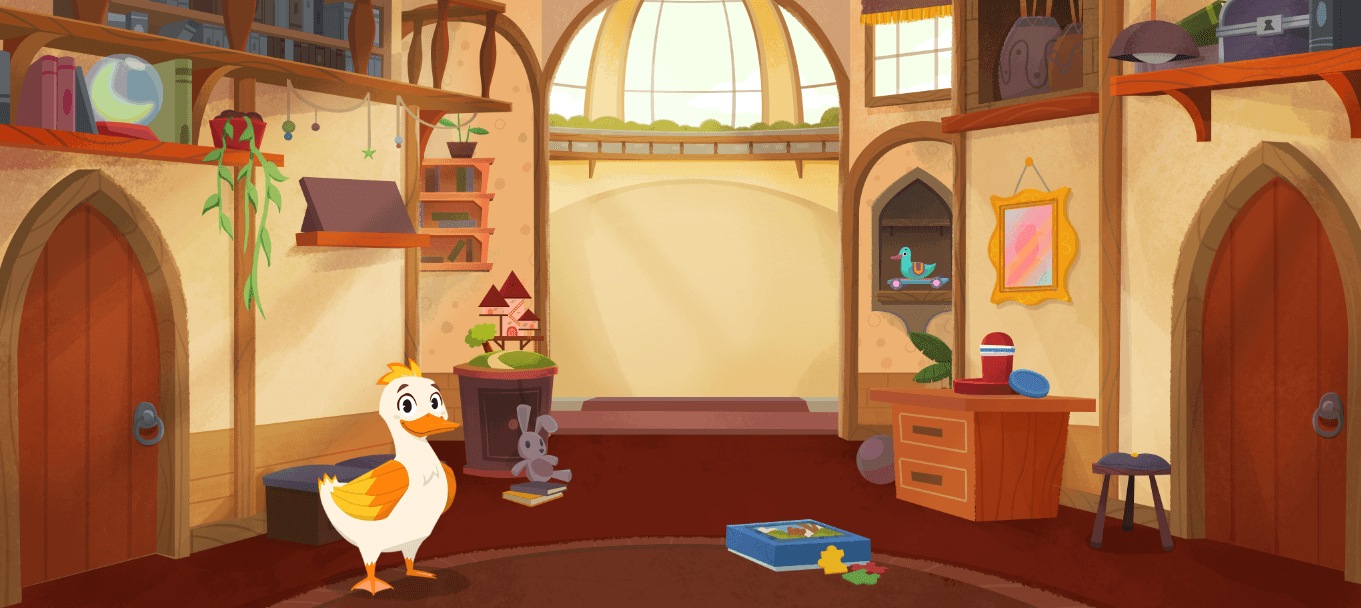
Friendships live somewhere. The Dreamer's Lodge gave the relationship a home: a warm, explorable space where activities, quests, and conversations all happened. Children weren't opening a chat UI. They were visiting a place where their friend lived. Returning to the app meant returning somewhere, to someone.
The Dreamer's Lodge: the world the friendship lived in
Testing
The signal: children chose Dux over the world.
Given an entire world to explore, children kept coming back to Dux.
We expected the Lodge to compete for attention. A new environment usually wins against a character. It didn't. In session after session, children explored briefly and then returned to interact with Dux. The attachment loop was doing exactly what it was designed to do: the relationship, not the content, was the draw.
The experience shipped as an A/B test on the Atlas Keeper platform (the traditional experience against the Dux companion experience), putting the attachment-versus-compulsion question in front of real usage data.
What This Taught Me
The bond was real in the moment. It just didn't last, and that taught me more than a win would have.
Inside a session, the attachment loop worked: children chose Dux over an open world, and talked to him before anyone taught them how. But it didn't convert into retention. Over the run, the numbers came in below the conventional experience, and the reasons were more instructive than any success would have been.
Habit is a strong incumbent
By the time children reach this product, they're fluent in the reward loops other apps have trained them on. A slower, relationship-based model competes against years of that conditioning, and in a single sitting, habit usually wins.
Bonds need time we didn't give
Real friendship forms over repeated encounters, not one meeting. We asked a 10-minute experience to build attachment deep enough to pull a child back the next day. The mechanism was sound; the runway was too short for it to take hold.
The lesson I took: attachment can be designed, but it can't be rushed, and it isn't automatically stronger than the habits it's up against. If I ran it again, I'd design for the arc of a relationship across many short sessions, not the weight of a single one.